
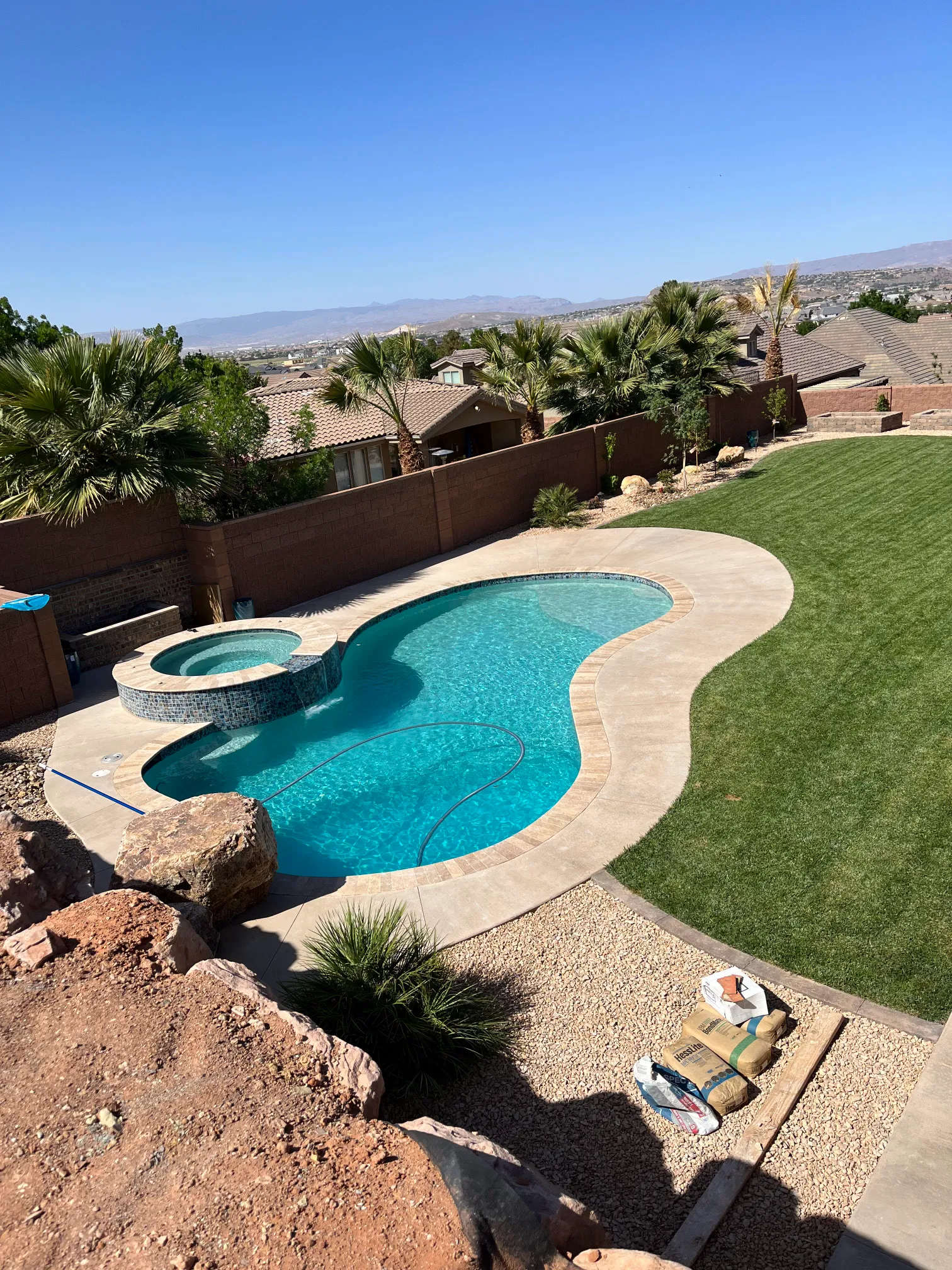
When your swimming pool starts showing signs of wear, it can be difficult to know what to do next.
Should you repair a few damaged areas? Does the entire interior need a new finish? Or is the problem something that requires attention beyond the plaster?
Understanding pool resurfacing vs. pool repair can help you ask the right questions before beginning a renovation.
For pool owners in St. George and Southern Utah, the best approach depends on the condition of the existing surface and the cause of the damage.
When a Localized Repair May Be Appropriate
Not every surface problem requires a complete replaster.
A small area of damage may be suitable for repair if the surrounding plaster is otherwise in good condition.
However, the feasibility of a repair depends on the type of finish, location of the problem, and condition of the underlying material.
Repairs may also remain visually noticeable, especially when the existing plaster has aged or changed color.
When Resurfacing Makes More Sense
Resurfacing may be appropriate when deterioration affects a large portion of the swimming pool.
Examples include widespread roughness, extensive pitting, deteriorated plaster, or numerous damaged areas.
Replacing the interior finish can provide a more consistent appearance across the pool.
When comparing pool resurfacing vs. pool repair, consider whether the issue is isolated or part of broader surface aging.
What About Cracks?
Cracks require careful evaluation because they can have different causes.
Some may be limited to the finish, while others can indicate movement or problems with the pool structure.
Applying new plaster without addressing a significant underlying issue may not solve the problem.
Structural concerns should be evaluated by an appropriately qualified professional before finishing work begins.
Consider the Age of the Existing Finish
The age of your plaster can help inform the decision, but it shouldn’t be the only factor.
An older finish with multiple deteriorated areas may be a better candidate for resurfacing than repeated patching.
On the other hand, a relatively sound finish with a small isolated defect may not need complete replacement.
The right solution depends on the actual condition of the pool.
Think About Your Long-Term Plans
If you’re already planning to update the appearance of your pool, resurfacing may align with your renovation goals.
A new finish offers an opportunity to explore different colors and textures.
If your priority is addressing a specific problem, a targeted repair may be worth discussing first.
Get Professional Guidance
Deciding between pool resurfacing vs. pool repair is easier when you understand the cause and extent of the damage.
Gooch Pool Plaster & Repair helps property owners throughout Southern Utah with pool plastering and surface restoration.
Ready to discuss the condition of your pool? Contact us to get started.