
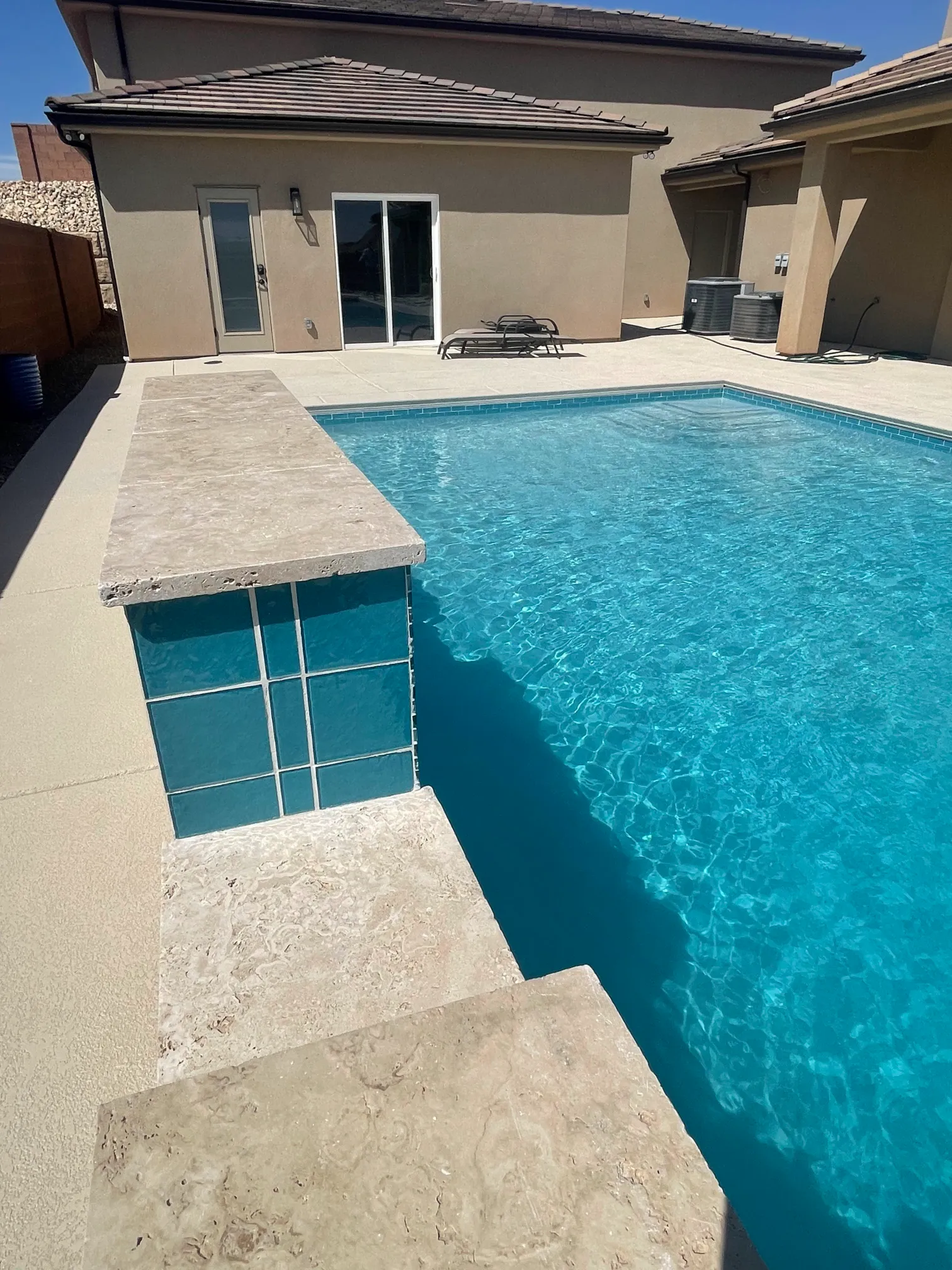
If you own a swimming pool in St. George or the surrounding Southern Utah area, you’ve probably wondered how long the interior finish will last. Your pool might look beautiful today, but constant exposure to water, chemicals, sunlight, and regular use can gradually affect its surface.
Understanding pool plaster lifespan can help you recognize when your swimming pool needs attention and plan for future renovations.
What Is the Typical Lifespan of Pool Plaster?
Traditional white plaster is often estimated to last around 7–12 years, although some finishes last longer and others require attention sooner.
The actual lifespan depends on several factors, including the original installation, water chemistry, maintenance practices, and the type of finish used.
Aggregate finishes may have different longevity expectations, depending on the material and installation system.
Rather than relying entirely on the age of your pool, pay attention to the condition of the surface.
How Southern Utah Conditions Affect Your Pool
St. George is known for hot summers and plenty of sunshine. These conditions can influence how frequently a swimming pool is used and how much attention its water chemistry requires.
High evaporation rates can contribute to changes in water balance as minerals become more concentrated.
If water chemistry is consistently outside recommended ranges, plaster can become etched, stained, or develop scale.
Maintaining appropriate water chemistry is one of the most important factors influencing pool plaster lifespan.
Signs Your Pool Finish Is Aging
As your pool gets older, watch for changes such as:
- Rough or abrasive areas along the walls and floor
- Persistent discoloration
- Surface pitting or deterioration
- Exposed underlying materials
- Plaster that appears to be flaking or separating
Not every stain or rough patch means you need a complete replaster. A professional inspection can help determine whether localized repairs or resurfacing are appropriate.
Can You Extend the Life of Pool Plaster?
Good maintenance habits can make a difference.
Keep pool water properly balanced, use cleaning methods appropriate for your finish, and address developing surface issues before they become more extensive.
It also helps to follow the specific care recommendations for your plaster or aggregate finish.
When Should You Consider Replastering?
There isn’t one universal replacement schedule for every pool.
If the finish is deteriorating, uncomfortable for swimmers, or no longer responding to appropriate maintenance, it may be time to discuss resurfacing options.
Gooch Pool Plaster & Repair works with Southern Utah homeowners to restore aging swimming pool surfaces.
If you’re concerned about your pool plaster lifespan or ready for a fresh finish, contact us to discuss your pool.