
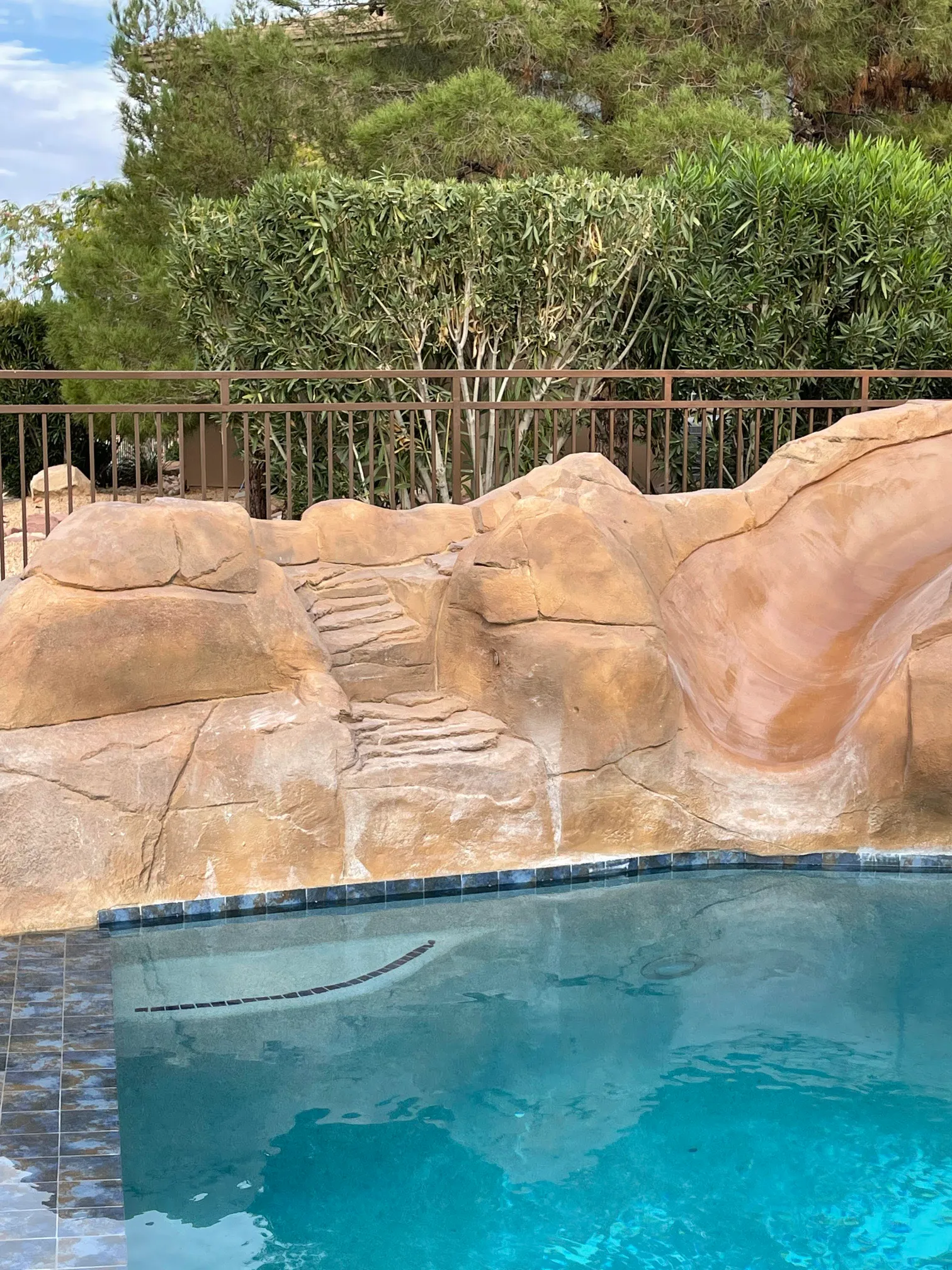
You walk outside, look at your swimming pool, and notice something that wasn’t there before. Maybe it’s a brown spot near the steps, a greenish tint along the walls, or discoloration that seems to be spreading.
Pool plaster stains can make an otherwise beautiful swimming pool look older than it really is. But before assuming the entire surface needs replacing, it’s important to understand what’s causing the discoloration.
For homeowners in St. George and Southern Utah, identifying the source of staining is the first step toward choosing the right solution.
What Causes Stains on Pool Plaster?
Not all pool stains have the same cause.
Some common sources include metals in the water, mineral deposits, organic material, and problems with water chemistry.
Iron may contribute to brown or rust-colored stains, while copper can sometimes create blue-green discoloration. Leaves and other organic debris may also leave marks on the pool surface.
The color of a stain can provide clues, but it isn’t enough to confirm the cause.
Is It a Stain or Surface Damage?
Sometimes, what looks like a stain is actually a change in the plaster itself.
As plaster ages, the surface can become rough, etched, or uneven. These changes may make discoloration more noticeable or difficult to address.
Pool plaster stains that remain after appropriate treatment may indicate that the existing finish needs closer inspection.
However, staining alone doesn’t necessarily mean replastering is required.
Why Proper Diagnosis Matters
Using the wrong cleaning method can create additional problems.
Aggressive chemical treatments, abrasive cleaning, or unnecessary acid washing may damage certain finishes or shorten their useful life.
Before attempting to remove a stubborn stain, identify the likely cause and determine which treatments are appropriate for the surface.
A qualified pool professional can help evaluate whether the issue is related to water chemistry, deposits, or deterioration.
When Is Replastering Worth Considering?
If the plaster is also rough, pitted, flaking, or extensively deteriorated, a new finish may be the more appropriate long-term solution.
Replastering can refresh the pool’s appearance and replace an aging interior surface.
It can also provide an opportunity to select a different finish color or texture.
Refresh Your Southern Utah Swimming Pool
Pool plaster stains can be frustrating, especially when regular cleaning doesn’t seem to make a difference.
Gooch Pool Plaster & Repair helps homeowners throughout Southern Utah restore swimming pool surfaces with professional plastering services.
If your pool’s interior is showing signs of wear, contact us to discuss your options.